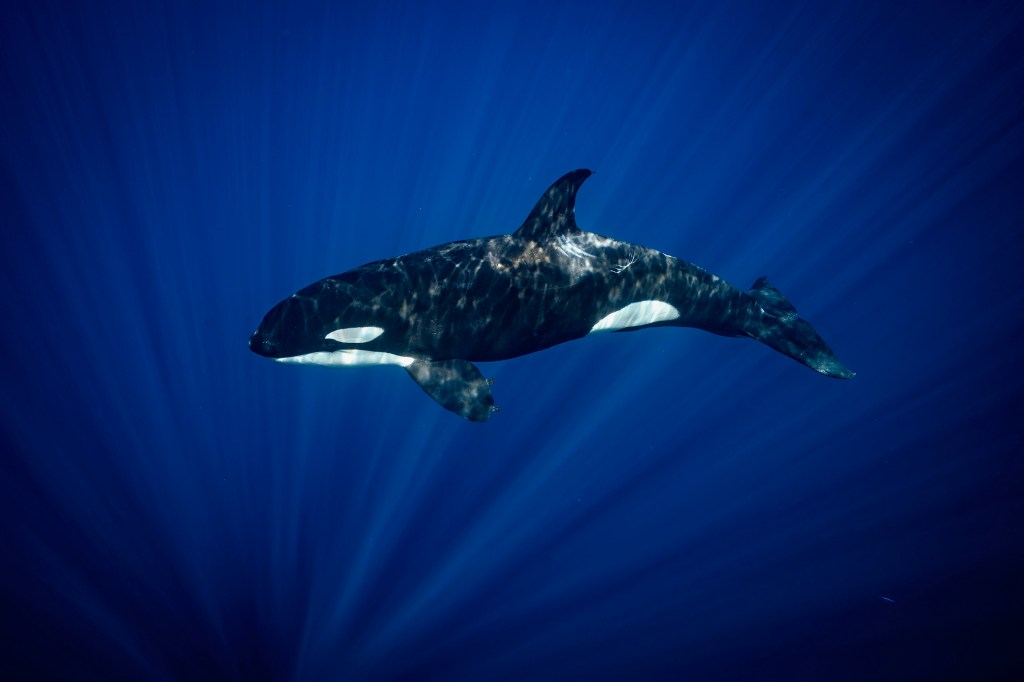
In recent years, orca sightings in the Sea of Cortez, especially near La Paz and La Ventana, have become increasingly common. With this rise in encounters, local captains and tour operators in Baja California Sur have united to adopt a shared code of conduct based on international best practices. Their goal: to carry out orca-related activities with professionalism, respect, and a deep commitment to conservation.
Swimming with wild orcas is a privilege, not a right. When approached responsibly, it can be a profound and respectful experience. But without care, it becomes harassment. This guide was created to protect the orcas, educate visitors, and promote ethical marine ecotourism in Mexico.
Table of Contents
- Why Responsible Orca Encounters Matter
- 1. Before Entering the Water
- 2. Ethical Boat Positioning & Swimming Protocol
- 3. Time Limits and Boat Rotations
- 4. Special Situations to Avoid
- 5. Ethics, Drones, and Social Media
- Ecotourism: A Good Intention Facing Real-World Challenges
Why Responsible Orca Encounters Matter
Orcas are intelligent, social, and sensitive animals. Poor practices can disturb key life processes such as:
- Feeding
- Resting
- Socializing
- Mating
- Teaching their young
Respectful interaction ensures not only their well-being but also a better experience for humans.
1. Before Entering the Water
- Keep a minimum distance of 300 meters when first approaching orcas.
- If the orcas avoid you or dive quickly, do not enter the water.
- Only enter the water if orcas approach the boat voluntarily.
- Engines must be in neutral or off when orcas are near.
2. Ethical Boat Positioning & Swimming Protocol
Boat Conduct
- Approach the pod from the side, not head-on or from behind.
- Keep one side free to avoid making orcas feel trapped.
- Communicate respectfully via radio to coordinate turns between boats.
Entering the Water
- Enter from 80 meters ahead and 40 meters to the side of the pod.
- Limit to 5 swimmers at a time.
- Enter quietly and without splashing.
- Float calmly or swim parallel. Do not chase or cross their path.
- Exit immediately if orcas show signs of stress: erratic movement, diving, or fleeing.
3. Time Limits and Boat Rotations
- Single boat: up to 45 minutes in the water.
- Multiple boats (max 3): 30 minutes per group, with others waiting at 300+ meters.
Distance & Speed Zones
| Zone | Distance | Max Speed | Boat Limit |
|---|---|---|---|
| Search Zone | 1000 m | 15 knots | — |
| Waiting Zone | 300 m | 5 knots | — |
| Observation Zone | 50 m | 1 knot | Max 3 boats |
| Snorkel Zone | 40 m | 1 knot | Max 1 boat |
4. Special Situations to Avoid
Mother and Calf
Only enter the water if the mother allows proximity. If she swims away or shows avoidance, stay out.
Sleeping Orcas
Do not approach closer than 400 meters. Do not swim with sleeping pods. Engines should be off if observing from afar.
Hunting Orcas
Do not enter the water if orcas are actively hunting.
Observe from 200 meters away.
Only consider swimming if the hunt has ended and the pod is calm, from 50 meters away minimum.
5. Ethics, Drones, and Social Media
- Do not feed or touch orcas.
- Do not tag exact GPS locations in social posts.
- Delay uploads by at least 24 hours to avoid drawing crowds (the “orca call”).
- Drones must fly at 50 meters altitude or higher.
Ecotourism: A Good Intention Facing Real-World Challenges
While these best practices aim to protect orcas and promote respectful tourism, the reality in parts of Baja California Sur tells a different story. Despite the efforts of some responsible operators, many captains and tour companies continue to ignore ethical guidelines, often chasing orcas, blocking their path, and overcrowding them with boats and swimmers.
As reported in The Guardian, swimming with orcas in Mexico has become “out of control” in certain areas, with unregulated tourism putting increasing pressure on these animals and creating unsafe situations for both wildlife and humans.
If no stronger enforcement or education is put in place, orca harassment will continue, damaging not only the animals but the credibility of marine tourism in Mexico.
The Sea of Cortez is still one of the world’s most unique marine habitats, but it is under threat. Real ecotourism means more than words: it requires action, restraint, and accountability.
Let’s not wait for tragedy to start protecting what we love. Let’s ensure that orcas are admired, not pursued.


 Orcas Mexico
Leave a comment