In July 2025, SEMARNAT published a long-awaited Orca Management Plan (Plan de Manejo Tipo) that aims to regulate how people interact with orcas in one of Mexico’s fastest-growing whale tourism destinations: La Ventana, a small coastal town in Baja California Sur.
Click here to see the full text of the official document (PDF, SEMARNAT)
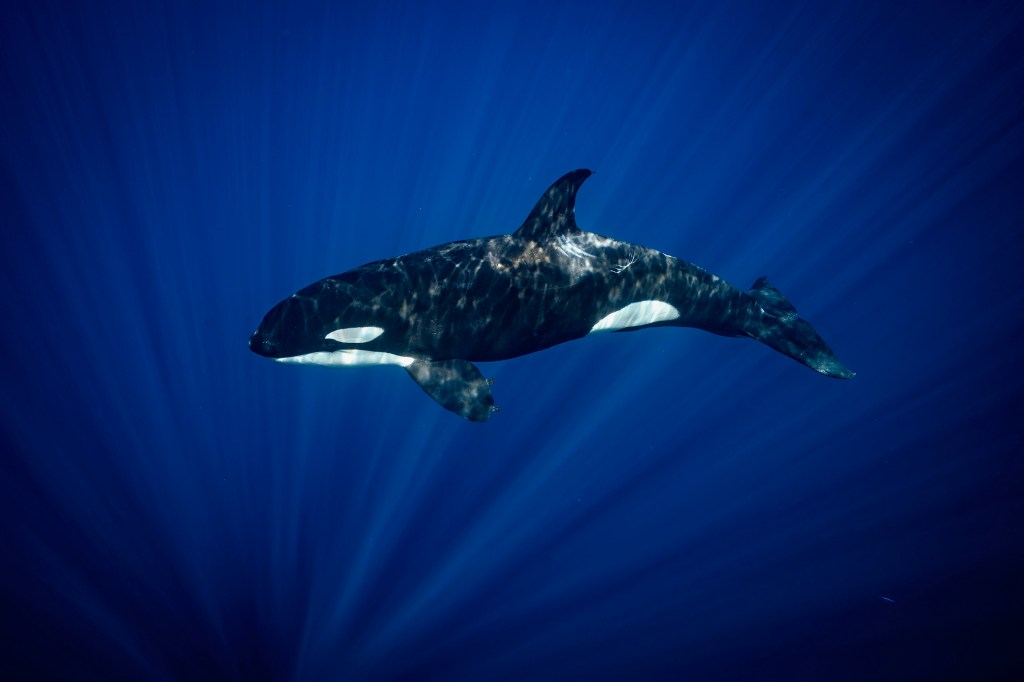
For years, the region has attracted free divers, filmmakers, and wildlife lovers drawn to the surreal possibility of swimming with wild orcas in the Sea of Cortez. But behind the viral videos and thrilling encounters, a growing chorus of scientists and locals have warned: this activity, if left unregulated, could harm the very animals it seeks to admire.
This new plan marks the first time that Mexico establishes clear, enforceable rules for orca tourism in the area. But the question remains: will it be enough?
Table of Contents
- 1. A Defined Area — and a Clear Need
- 2. What the Plan Regulates
- 3. When Can You Swim with Orcas?
- 4. Monitoring and Reports
- 5. Well-Intentioned, But Very Difficult to Apply
- 6. A Turning Point for Whale Tourism
- 7. Planning to Swim with Orcas in La Ventana?
1. A Defined Area — and a Clear Need
The plan defines a large marine polygon of over 110,000 hectares, covering La Ventana, Isla Cerralvo, Ensenada de Muertos and part of the La Paz coastline. Within this zone, orca observation and swimming are permitted only under strict conditions and during a regulated season — from August 1, 2025 to July 31, 2026.

However, this plan only applies within that specific zone. Orca encounters also occur frequently in nearby areas such as Loreto, Cabo Pulmo, Espiritu Santo Island or Bahía Magdalena, which currently remain unregulated. That means there are no official rules or limits in place for orca interactions outside the La Ventana polygon — a serious gap for marine conservation and responsible tourism.
As a result, the same activity may be fully regulated in one location and completely unregulated just 30 miles away.
2. What the Plan Regulates
Each authorized vessel must be:
- Less than 10 meters long
- Clearly marked with a SEMARNAT permit flag
- Equipped with safety gear and a waste container
Only one permit per vessel is granted, and a maximum of 24 boats per day may operate in the zone, divided into 8 blocks of 4 hours each. The plan also limits time with orcas to:
- 15 minutes maneuvering
- 30 minutes observing
- With a total outing time of 4 hours max
3. When Can You Swim with Orcas?
Swimming is only allowed under very specific conditions:
- When orcas are calm, stationary, or feeding on fish, rays, or mobulas
- Not allowed during active hunting, high-speed travel, or rest
- No more than 5 people (including guide) in the water per vessel
Boats must follow precise approach rules:
- Wait at 100 meters (buffer zone)
- Hold at 60 meters (waiting zone)
- Approach to 20 meters only if animals allow
- Swimmers must enter parallel, not intercepting the pod
4. Monitoring and Reports
To increase accountability, the plan also includes:
- Mandatory GPS tracking on all boats
- Annual report submission including:
- Number of tours and swimmers
- Behavior and sightings
- Infractions or risky situations
These reports must be submitted between August and October 2026.
5. Well-Intentioned, But Very Difficult to Apply
While the regulations are detailed and appear scientifically grounded, putting them into practice in real-world marine conditions is extremely challenging.
For starters, interpreting orca behavior in real-time is complex — even for experienced guides. The same orca might be feeding one minute and begin hunting the next. Distinguishing between resting and socializing behaviors is not always obvious, especially from the surface and without expert observers onboard.
Also, rules that depend on the behavior of the animal — like only allowing swimming when the orca is calm or feeding on fish — introduce a high degree of subjectivity and interpretation. The only clearly enforceable behavior ban is for orcas “in route” (in transit), which is much easier to observe.
Another major challenge is coordination between multiple vessels. The plan assumes guides will communicate and take turns responsibly — but with no enforcement presence on the water and high competition for sightings, conflicts are bound to occur.
“You’d need patrol boats out there every day,” one local operator told us. “Otherwise it’s all voluntary. And when people see orcas, rules often go out the window.”
Finally, there’s the issue of education and awareness. Most tourists — and even some guides — are not fully informed of the regulations. Without signage, training, or outreach, compliance will likely remain low.
6. A Turning Point for Whale Tourism
Despite its limitations, the plan represents a key milestone: a first attempt to formalize responsible orca tourism in a region that desperately needs it. It’s a legal tool that can be used to educate, coordinate, and — ideally — penalize violators.
But it is not a solution by itself.
For this to work, there needs to be:
- Enforcement at sea (not just on paper)
- Public awareness campaigns
- A willingness from both operators and tourists to put the animals’ welfare first
Only then can La Ventana truly become a model for ethical marine ecotourism in Mexico.
7. Planning to Swim with Orcas in La Ventana?
Keep this in mind:
- Book only with licensed operators
- Don’t pressure captains and guides — they must follow the law
- Respect other boats and wait your turn


 Orcas Mexico
Leave a comment